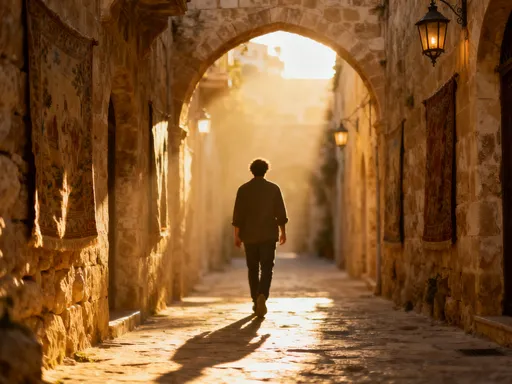
Lost in Venice, One Slow Bite at a Time
Imagine wandering fog-draped canals with no map, stumbling upon a tiny bacaro where the wine is poured from dented copper tanks and nonna slides you a plate of warm sarde in saor you didn’t know you needed. That’s Venice—not as a checklist, but as a rhythm. Slow travel here isn’t just choice; it’s surrender. And the real magic? It happens at the table. In a city where every alley bends like a secret and every bridge offers a new perspective, the most meaningful discoveries often come not from sightseeing, but from sitting—sitting at a worn wooden counter, sitting through a long afternoon espresso, sitting across from a local who shares stories with a smile. This is not a city to be conquered, but one to be felt, tasted, and lived, bite by deliberate bite.
The Rhythm of Arrival: Letting Go of the Itinerary
Venice does not welcome the hurried. From the moment travelers step off the train at Santa Lucia station, the city begins its quiet insistence: slow down. The absence of cars, the soft lap of water against stone, the labyrinth of alleyways with no street signs—these are not inconveniences, but invitations. To arrive in Venice with a tightly packed itinerary is to misunderstand its essence. The city resists linear logic, and those who try to map every basilica, bridge, and museum in a single day often leave exhausted, their memories blurred by motion. True immersion begins not with planning, but with release.
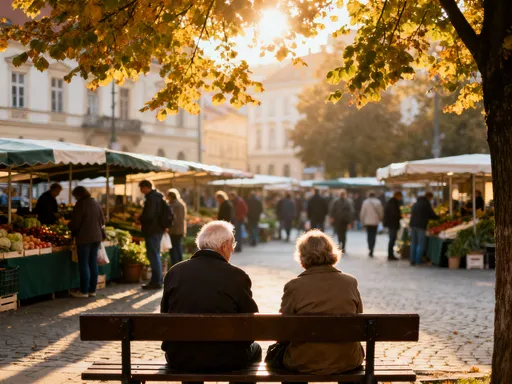
Disorientation is not a failure in Venice—it is a starting point. Without GPS signals or clear directions, travelers are forced into presence. They notice details: the curve of a weathered door handle, the scent of damp stone and salt air, the sound of distant church bells echoing across the lagoon. These moments, unscripted and unplanned, become the soul of the journey. A wrong turn might lead to a sunlit campo where children kick a ball, or a quiet fondamenta where an elderly couple sits on a bench, sharing a sandwich and a bottle of wine. These are not detours—they are the destination.
One of the most rewarding experiences is visiting the Rialto Market in the early morning, not as a tourist stop, but as a local ritual. Arriving around 7:30 a.m., when the stalls are being set up and fishermen unload their catch, offers a rare glimpse into the city’s living rhythm. The market is alive with color—silver-skinned moeche (soft-shell crabs), ruby-red radicchio from Treviso, baskets of artichokes and wild greens. The fishmongers call out to regulars by name, their voices sharp and warm. To stand and watch, to listen, to let the scene unfold without rushing through—this is how one begins to belong, even if only for a day.
Letting go of the itinerary also means embracing stillness. Sitting at a café not to check it off a list, but to watch the world pass by. Waiting for the light to shift on the Basilica dei Frari, turning its stone walls from gray to gold. These moments of pause are not wasted time—they are the foundation of memory. Venice teaches that presence, not productivity, is the measure of a meaningful journey. The city does not reveal itself to those who rush, but to those who linger.
Eating Like a Local: Beyond Cicchetti and Spritz
It is easy to fall into the cycle of cicchetti and Aperol spritz—small plates of fried seafood or crostini washed down with bright orange cocktails. While these are part of Venetian culture, they represent only a fraction of its culinary depth. To eat like a local is to move beyond the postcard version of Venice and into its kitchens, where tradition, seasonality, and the rhythm of the lagoon shape every meal. The true flavors of the city are found not in tourist-heavy squares, but in neighborhood osterie where the menu changes daily and the wine is served from carafes.
One of the most beloved traditional dishes is bigoli in salsa—a thick, hand-rolled pasta served with a sauce of slow-cooked onions and anchovies. The dish, simple in appearance, carries centuries of history. Its origins lie in the fishing communities of the lagoon, where preserved fish and pantry staples were transformed into something deeply satisfying. The umami richness of the anchovies, balanced by the sweetness of caramelized onions, reflects the Venetian skill of making luxury from scarcity. It is not flashy, but it is honest—a dish meant to nourish, not impress.
Another staple, especially in spring, is risi e bisi—a creamy rice and pea dish that blurs the line between soup and risotto. Once prepared for the Doge on Saint Mark’s Day, it remains a symbol of civic pride. Made with fresh peas, pancetta, and Parmesan, it is rich without being heavy, festive without being extravagant. Families gather to eat it on April 25th, but in home kitchens, it appears whenever the first peas arrive at the market. To taste it outside of Venice is to miss its context—the anticipation, the seasonality, the shared joy of a fleeting ingredient.
Equally important is fegato alla veneziana—calf’s liver cooked with onions. Often served with polenta, it is a dish of texture and depth, beloved by older generations and increasingly appreciated by younger diners reclaiming traditional flavors. The liver is sliced thin, seared quickly, and simmered in a sweet-savory onion confit. It is not for the faint of heart, but for those willing to try, it offers a taste of Venice’s culinary courage—its willingness to use every part, to honor the animal, to find beauty in the humble.
What ties these dishes together is their connection to the lagoon. Venetian cuisine is not about abundance, but adaptation. For centuries, the city survived on what the sea and nearby fields provided. Fishermen brought in branzino, sardines, and cuttlefish. Farmers from the mainland supplied beans, rice, and vegetables. Spices from the East added complexity, but the foundation remained local and seasonal. Today, the best restaurants still follow this rhythm, closing during the hottest months when seafood is less reliable, or adjusting menus based on the day’s catch. To eat in Venice is to align with nature’s calendar, not the tourist season.
Bacari Hopping the Slow Way: Sips, Stories, and Standing
No experience captures the spirit of Venetian dining quite like the bacaro—a small, unassuming wine bar where locals gather in the late afternoon for a glass of wine and a few small bites. These are not bars in the American sense, with stools and neon signs, but intimate spaces where conversation flows as freely as the wine. The ritual is simple: stand at the counter, order an ombra (a small glass of house wine), and choose a cicchetto from the display. But the simplicity is deceptive. Within this routine lies a culture of connection, of community, of taking time.
A true bacaro crawl is not a race. It is not about visiting ten bars in two hours, ticking them off a list. It is about lingering in one or two, letting the afternoon stretch. The first stop might be in the quieter neighborhood of Santa Croce, where a family-run bar offers marinated sardines on polenta and a crisp white from the Friuli region. The owner remembers regulars, asks after their families, and offers a taste of something new—a house-cured salami, a small plate of boiled octopus with lemon. There is no pressure to move on. In fact, staying too long is the point.
The atmosphere in a bacaro is warm, often crowded, always alive. Mirrors are fogged, glasses clink, laughter rises above the hum of conversation. Men in work clothes unwind after a day on construction sites. Retired fishermen debate the weather. Young couples share a plate of crostini and a bottle of wine. The counter becomes a table without chairs, a place of equality. Everyone stands, everyone shares space, everyone participates in the unspoken rhythm of the place.
Ordering is part instinct, part trust. Menus are often handwritten on chalkboards, changing daily based on what’s fresh. Some cicchetti are warm—fried mozzarella in carrozza, small meatballs—while others are cold—anchovy-stuffed peppers, marinated vegetables. The key is to ask, to point, to let the bartender guide you. A nod, a smile, a simple “Cosa mi consiglia?” (What do you recommend?) can lead to the best bite of the trip. And the wine—always house wine unless specified—is poured from large carafes or, in older establishments, from dented copper tanks that have been in use for decades.
The beauty of the bacaro lies in its impermanence. These are not polished experiences designed for Instagram. They are real, sometimes messy, always human. A glass might break. The wine might be too warm. The cicchetto might be simpler than expected. But in those moments, there is authenticity. To stand in a bacaro, sipping wine, eating with your hands, talking to strangers, is to feel, however briefly, like you are part of the city’s daily life.
Finding the Hidden Osterie: Off the Beaten Path, Not Off the Map
While Saint Mark’s Square dazzles with its grand cafés and canal views, the heart of Venetian dining beats in quieter neighborhoods—Dorsoduro, Cannaregio, Castello—where streets narrow and tourism fades. Here, tucked between bakeries and hardware stores, are the city’s true osterie: family-run, unpretentious, and deeply rooted in local life. These are not hidden in the sense of being secret, but in the sense of being overlooked by those who follow guidebooks too closely.
An authentic osteria announces itself in subtle ways. There is no laminated menu in five languages. No smiling hostess beckoning from the doorway. Instead, there might be a hand-painted sign, a chalkboard listing the day’s specials, a few plastic chairs spilling onto the sidewalk. Inside, the tables are simple, often covered in red-and-white checkered cloths. The lighting is soft, the music low, the air thick with the smell of garlic and simmering sauce. The staff, usually a husband-and-wife team or multi-generational family, move with quiet efficiency.
One of the clearest signs of authenticity is the absence of tourists. If every other table is speaking English or German, the experience may be diluted. But if the room is filled with locals—older couples, groups of friends, families with children—then you’ve found the real thing. These are places where meals last two, sometimes three hours, not because service is slow, but because no one is in a hurry. Courses arrive when they are ready. Wine is refilled without asking. Dessert might be a simple piece of fruit or a small glass of grappa offered as a gesture of hospitality.
Menus are seasonal and regional. In autumn, expect dishes like pasta e fasioi (bean and pasta soup) or roasted duck with pear. In winter, look for sarde in saor—a sweet-and-sour sardine dish marinated with onions, vinegar, and raisins, traditionally made after the sardine run. In spring, fresh asparagus and artichokes appear, often simply grilled or sautéed with olive oil. Summer brings lighter fare—insalata di mare, grilled fish, cold pasta salads—but even then, the cooking remains rooted in tradition.
Dining in these osterie is not just about food—it is about rhythm. The pace is slow, the mood relaxed, the focus on conversation and connection. There are no time limits, no pressure to turn tables. The goal is not to serve as many people as possible, but to create a space where people want to stay. In a world increasingly driven by speed and efficiency, these restaurants are acts of resistance—small, quiet affirmations that some things are worth taking time for.
Market Days: Rialto as a Feast for the Senses
The Rialto Market is not a tourist attraction—it is a working market, a living kitchen, the heartbeat of Venetian food culture. Open since the 11th century, it has long been the city’s primary source of fresh ingredients. Today, it remains a place of ritual, where chefs, home cooks, and vendors gather daily to trade, bargain, and celebrate the lagoon’s bounty. To visit the market is not just to see food, but to feel its energy, to hear its language, to become part of its rhythm.
The market unfolds in two parts: the Erberia, a covered arcade filled with fruits, vegetables, and herbs, and the Pescheria, an open-air fish market along the canal. Arriving early—before 9 a.m.—is essential. By mid-morning, the best fish are gone, the stalls are picked over, and the crowd shifts from locals to tourists. But in the first hours, the market is at its most vibrant. Fishermen unload crates of branzino, octopus, and squid directly from their boats. Vendors arrange mussels in neat rows, their shells glistening with seawater. A woman sorts through wild chicory, selecting only the tenderest leaves.
The colors are overwhelming—deep green artichokes, purple radicchio, golden lemons, ruby-red prawns. The scents are layered—salt, citrus, earth, fish, herbs. The sounds form a chorus—knives on cutting boards, the slap of fish on marble, the rapid-fire Venetian dialect of bargaining. It is not a quiet place, but it is not chaotic. There is order in the movement, a rhythm in the repetition. Each vendor has their regulars. Each stall has its specialty. A man known for his wild asparagus will hand a sprig to a passing chef with a wink. A fishmonger will save a whole sea bass for a woman who comes every Tuesday.
Even if you are not buying, the market deepens your understanding of Venetian cuisine. You begin to see where the ingredients come from, how they are selected, how they are treated with care. You learn that freshness is not a marketing term, but a necessity. You realize that cooking here is not about technique alone, but about respect—for the sea, for the land, for the people who work them. And when you later sit down to a plate of grilled fish or a salad of local greens, the meal carries more meaning because you have seen its origin.
Some travelers take cooking classes that begin with a market tour, guided by a local chef who explains the seasonal logic of Venetian food. This is one of the most immersive ways to experience the market—not as a spectator, but as a participant. Choosing fish based on how it smells, not how it looks. Learning to identify moeche by their translucent shells. Understanding why certain herbs are paired with certain fish. These are lessons that stay with you long after the trip ends.
Timing the Table: Why Lunch Starts at 12:30 and Dinner Waits Until 8
In Venice, as in much of Italy, meals are not events to be scheduled around convenience, but rituals to be honored. The dining schedule is not arbitrary—it reflects a cultural commitment to slowness, to pleasure, to the belief that food is more than fuel. Lunch in Venice typically begins around 12:30 or 1 p.m., not at noon. Dinner rarely starts before 8 p.m., and often closer to 8:30. For travelers used to eating early, this can be challenging. But adapting to Venetian time is one of the most important steps in experiencing the city authentically.
Early-bird specials, often marketed to tourists, are not just financially discounted—they are culturally diminished. Restaurants offering dinner at 5:30 p.m. are usually preparing simpler, pre-made dishes. The kitchen staff may not even be fully present. The atmosphere is quiet, the energy low. By contrast, a restaurant at 8:30 p.m. is alive. The kitchen is in full swing. The wine is properly decanted. The staff are engaged, the tables full. To eat at the right time is to eat at the peak of the restaurant’s rhythm.
Lunch, too, is an event. It is not a sandwich at a café, but a multi-course meal that unfolds over an hour or more. Antipasto, primo, secondo, contorno, dessert—each course is given its due. Conversations deepen. Glasses are refilled. The world outside slows. This is not laziness; it is intentionality. In a city with no cars and narrow streets, there is no need to rush. Work ends at a reasonable hour. Families eat together. Meals are protected.
Syncing with this rhythm changes the traveler’s experience. It forces a pause in the day. It creates space for reflection, for connection, for presence. A late lunch means a late start to the afternoon, which means fewer sights checked off—but richer memories made. A dinner at 8:30 means an evening stroll along the canal before eating, the city glowing in the twilight. These moments, shaped by timing, become part of the meal itself.
For families traveling with children, adjusting to this schedule may require planning—earlier snacks, picnics by the canal, patience. But even young travelers can adapt, especially when they see that eating late means more time for gelato, more time for laughter, more time for the simple joy of sitting together. In Venice, time at the table is not lost—it is invested.
The Last Bite: How Slow Dining Changes the Way You Travel
Leaving Venice, one does not carry souvenirs in a suitcase, but in the body and mind. The taste of warm sarde in saor, the sound of laughter in a bacaro, the smell of fish at Rialto—these linger long after the journey ends. More than that, the rhythm of slow dining reshapes how one moves through the world. It teaches that travel is not about accumulation, but about absorption. Not about seeing everything, but about feeling something deeply.
Slow dining is not a luxury—it is a philosophy. It is the belief that meals are not interruptions to the day, but the day itself. In Venice, where every alley resists haste and every meal unfolds on its own terms, this philosophy is lived, not preached. To embrace it is to travel with greater awareness, greater gratitude, greater joy.
The lessons extend beyond food. They apply to how we listen, how we observe, how we connect. A conversation over wine becomes more meaningful when not rushed. A view of the Grand Canal gains depth when seen from a bench, not a vaporetto. A wrong turn becomes an adventure, not a mistake. Slow travel, rooted in the rhythm of the table, transforms not just the trip, but the traveler.
Venice does not give up its secrets to those who pass through quickly. It reveals itself to those who stay, who sit, who taste. And in the end, the most lasting memory may not be a monument or a view, but a moment: standing at a counter, wine in hand, a stranger smiling, a plate of food appearing as if by magic. In that instant, one is not a tourist. One is simply there—present, full, and exactly where they need to be.