Whispers of Stone and Sky: Nizwa’s Hidden Architectural Soul
You know what? I didn’t expect Oman to hit me like that. But walking through Nizwa, with its sun-baked stone towers and silent alleyways, I felt like I’d stepped into a secret world. The architecture here isn’t just old—it’s alive, whispering stories of scholars, traders, and imams. This is more than a visit; it’s a conversation with history, written in mudbrick and carved in wood. Unlike many historic towns turned into tourist spectacles, Nizwa remains deeply rooted in daily life. Its buildings do not stand behind velvet ropes—they shelter families, host merchants, and echo with prayer calls. Here, heritage is not preserved in glass cases but lived, breathed, and passed down. To walk through Nizwa is to witness a rare harmony: ancient design that still serves modern needs, where every arch, corridor, and courtyard tells a story of resilience, faith, and human ingenuity.
The First Glimpse: Arriving in Nizwa with No Expectations
Leaving Muscat behind, the journey to Nizwa unfolds across a landscape that seems to shift in temperament as the miles pass. For nearly two hours, the highway cuts through rugged mountain ranges, their ochre and gray faces eroded by centuries of wind and sun. The terrain alternates between stark, rocky plateaus and sudden bursts of green—oases fed by ancient water channels known as aflaj, where date palms rise like sentinels from the dust. As the road climbs and descends through the Al Hajar range, the air cools slightly, carrying the faint scent of dry thyme and earth. Then, almost without warning, Nizwa appears in the valley below, not with fanfare but with quiet dignity.
There are no towering hotels, no neon signs, no sprawling shopping centers. Instead, the town rises gently from the land, its low-slung buildings hugging the earth in tones of sand and stone. The skyline is broken only by the massive, cylindrical tower of Nizwa Fort and the occasional minaret. This absence of modern clutter is striking. In a world where historic towns often sacrifice authenticity for convenience, Nizwa feels refreshingly unaltered. The buildings do not imitate the past—they are the past, adapted with care and continuity. Even the roads, while paved, follow the same paths traders and pilgrims once walked.
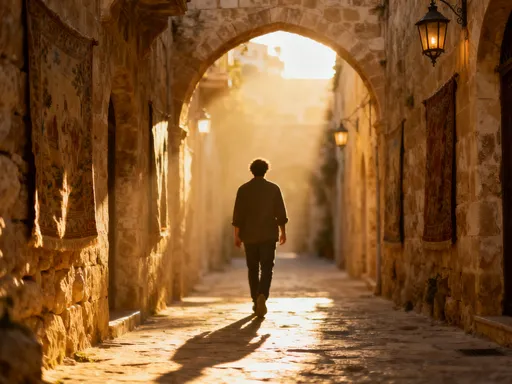
Entering the old quarter, the pace slows. The wide highway gives way to narrow lanes shaded by overhanging rooftops. The sound of traffic fades, replaced by the soft clatter of goat hooves on stone and the murmur of voices from open doorways. There’s a sense of time unfolding differently here—not frozen, but flowing at its own rhythm. Visitors are not herded into designated zones; they simply become part of the fabric. A woman in a flowing abaya kneels to arrange baskets of dried limes in the souq. A group of children laugh as they dart between courtyard walls. The town does not perform for tourists; it lives. And in that authenticity lies its greatest charm.
Nizwa Fort: Where Function Meets Spiritual Design
Rising 30 meters above the town, Nizwa Fort is the heart of the city’s architectural and historical identity. Built in the 17th century under the rule of Imam Sultan bin Saif, the fort is a masterpiece of defensive engineering and cultural symbolism. Its most striking feature—the massive circular tower—is not merely imposing in appearance; it was designed to withstand cannon fire, with walls up to 4 meters thick at the base. Unlike square towers, which have vulnerable corners, the rounded design deflects projectiles and allows defenders to see in all directions. But this is not just a military structure. The fort embodies a worldview in which protection, community, and faith are inseparable.
Inside, the layout reveals a sophisticated understanding of both warfare and daily life. Narrow, zigzagging corridors slow down intruders while allowing defenders to ambush from above. Hidden trapdoors in the floors could drop attackers into dark chambers below. Ventilation shafts—early examples of passive cooling—channel breezes through the interior, keeping the air breathable even in summer’s peak. Water cisterns, carved into the stone, stored months’ supply, ensuring survival during sieges. Every element serves a purpose, and nothing is ornamental for its own sake.
Yet amid this focus on defense, there is space for the sacred. At the highest level of the tower, overlooking the entire town and surrounding valleys, is a small prayer room. This placement is no accident. It signifies that spiritual awareness was as essential as military readiness. The imam who led prayers here would have had a panoramic view—not just of the land, but of his responsibility to protect it. Even the acoustics were designed with intention. A single voice from the top could be heard clearly in the courtyard below, allowing commands or calls to prayer to carry without amplification. This fusion of function and faith makes the fort more than a relic—it is a testament to a society that valued both strength and soul.
The Old City: Walking Through a Living Archive
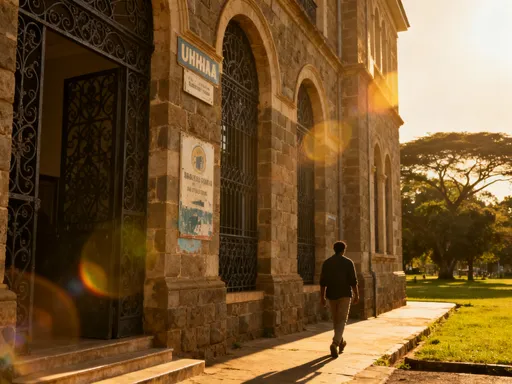
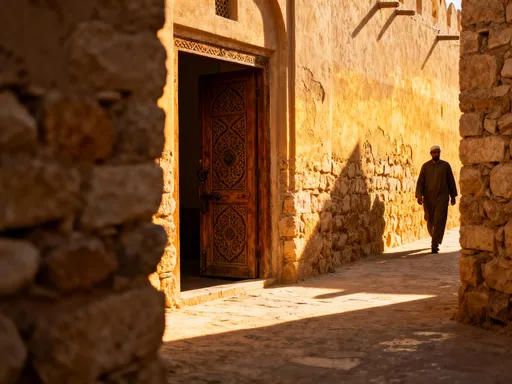
Just beyond the fort lies the historic core of Nizwa—a maze of alleyways, courtyard homes, and shaded passageways that have housed generations of families. This is not a reconstructed village or a heritage site sealed off for tourists. It is a living neighborhood, where children play near ancestral doors and elders sip tea in cool interior courtyards. The architecture here is not preserved behind glass—it is used, maintained, and quietly evolving. Walking through these narrow lanes feels like moving through a three-dimensional archive, where every wall, window, and roofline holds meaning.
The homes are built from locally sourced materials: limestone blocks, mud plaster, and palm wood beams. These are not chosen for aesthetic nostalgia but for practical resilience. The thick stone walls absorb heat during the day and release it slowly at night, stabilizing indoor temperatures. Roofs are often topped with wind towers—known locally as badjeer—which catch breezes from different directions and funnel them into living spaces, providing natural ventilation. Small, high windows limit direct sunlight while allowing airflow, and interior courtyards create microclimates of shade and calm.
What stands out most is the sense of community embedded in the design. Houses are built close together, their walls shared for structural and thermal efficiency. Many open into communal lanes that double as social corridors—places where neighbors exchange news, children play, and afternoon greetings are exchanged. Courtyards, often centered around a small fountain or potted plants, serve as family gathering spaces, shielded from the outside world. This architecture does not isolate; it connects. It reflects a culture where privacy is balanced with proximity, and where the built environment supports not just survival, but belonging.
The Souq: Commerce Woven into Architectural Rhythm
Every Friday, the Nizwa Souq comes alive with color, scent, and movement. Farmers, artisans, and traders from surrounding villages gather to sell dates, honey, silverware, and livestock. But beyond the vibrant commerce, the souq is an architectural achievement in its own right. Its covered walkways, domed ceilings, and arched niches are not merely decorative—they are carefully designed to respond to the harsh climate and social patterns of the region. The layout ensures shade, promotes airflow, and organizes trade in a way that feels both orderly and organic.
The covered sections of the souq are built with thick stone walls and vaulted roofs that block the sun while allowing hot air to rise. Open courtyards and gaps between structures create natural ventilation, drawing in cooler air from surrounding areas. The market is divided into zones: one for spices, where mounds of saffron, cumin, and dried lime fill woven baskets; another for textiles, with handwoven scarves and traditional dishdashas hung in shaded alcoves; and a dedicated section for Omani silver, where craftsmen display intricately engraved jewelry and khanjars, the curved ceremonial daggers that are a national symbol.
At the heart of the souq is the livestock market, a vast open space where goats, sheep, and cattle are brought for sale. This area, though more utilitarian, is still thoughtfully placed—downwind from food stalls and residential areas, minimizing odor and noise. The entire market operates on a rhythm that has changed little in centuries. Traders arrive before dawn. Bargaining is polite, almost ritualistic. Transactions are often sealed with a shared cup of sweetened Omani coffee. The souq is not just a place to buy and sell; it is a social institution, a marketplace where relationships are as important as goods. Its architecture supports this rhythm, proving that design can shape not just space, but culture.
Beyond the Fort: Hidden Structures in the Hills
While Nizwa Fort and the old city draw the most visitors, the surrounding highlands hold quieter, lesser-known treasures—abandoned watchtowers perched on rocky outcrops, ancient village ruins clinging to mountain slopes, and the intricate network of aflaj irrigation systems that have sustained life in this arid region for over a thousand years. These structures, though less celebrated, are just as vital to understanding Nizwa’s architectural genius. They reveal a civilization that did not merely survive in a harsh environment but thrived by working with it, not against it.
The aflaj—singular falaj—are underground channels that transport water from mountain springs to villages and date plantations. Some are hundreds of meters long, gently sloped to allow gravity to move the water without pumps or electricity. The system is so precise that water is distributed according to a rotating schedule, often managed by a community-appointed caretaker. These channels are not just engineering feats; they are social contracts, ensuring fairness and sustainability. Villages grew around them, their layouts shaped by access to water. Even today, many farms depend on the same falaj that their ancestors used.
Scattered across the hills are the remains of old watchtowers, built to guard trade routes and signal danger. Though now silent and crumbling, their placement speaks of strategic brilliance—each positioned to see the next, allowing messages to be passed by fire or smoke. Nearby, the ruins of stone villages like Al Hamra and Misfat al Abriyeen show how people once built homes into the cliffs, using natural rock formations for insulation and protection. These structures were not imposed on the landscape; they emerged from it. Their survival for centuries, with minimal maintenance, is a lesson in sustainable design long before the term existed.
Craft and Construction: The Hands Behind the Stone
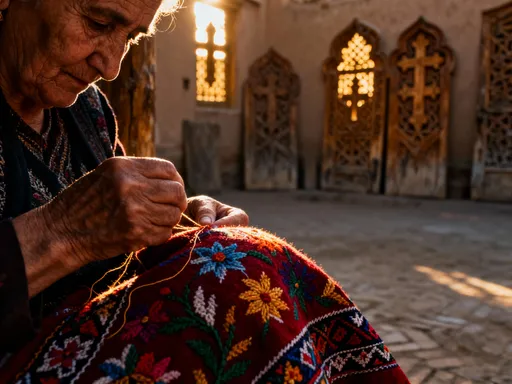
The architecture of Nizwa is not just the work of centuries past—it is kept alive by the hands of artisans who continue to practice traditional methods. In small workshops near the souq, woodcarvers chip away at sandalwood and teak, creating the elaborate doors that are a hallmark of Omani homes. Each door is a piece of art, its geometric patterns and inscriptions reflecting Islamic design principles that avoid figurative representation. The craftsmanship is meticulous, passed down from father to son, with apprentices learning by doing, not by textbook.
Equally remarkable are the builders who construct domes without scaffolding. Using a technique known as corbelling, they layer stones or bricks in gradually narrowing rings, each layer projecting slightly inward until the circle closes at the top. This method requires no temporary support and has been used for centuries in mosques, homes, and storage rooms. Similarly, the badjeer—wind towers—are still built using traditional measurements and orientation rules, ensuring they capture the prevailing breezes. These skills are not relics; they are living practices, used in new constructions and restoration projects alike.
Preservation efforts in Nizwa are careful not to over-commercialize. Unlike some heritage sites that become tourist traps, Nizwa’s restoration projects prioritize authenticity. Government and community initiatives work together to repair homes and public buildings using original materials and methods. Modern utilities like electricity and plumbing are integrated discreetly, without compromising the architectural integrity. The goal is not to turn the town into a museum, but to ensure it remains a livable, functional place. This balance—between progress and preservation—is one of Nizwa’s quiet triumphs.
Why This Architecture Matters: A Model for the Future
In an age of glass towers, air-conditioned malls, and energy-intensive buildings, Nizwa’s architecture offers a powerful alternative. It proves that design can be both beautiful and practical, that sustainability is not a new idea but an ancient wisdom. The thick walls, shaded courtyards, wind towers, and water channels were not invented for environmental slogans—they were born of necessity, refined by experience, and perfected over generations. And yet, they align perfectly with modern principles of passive cooling, water conservation, and community-centered planning.
More than that, Nizwa’s built environment reflects a deeper philosophy—one that values harmony over domination, resilience over spectacle, and continuity over novelty. In a world where so much feels temporary and disposable, this town stands as a reminder that some things are meant to last. Its buildings were not designed for Instagram moments but for generations of families to live, pray, and grow within. They do not shout for attention; they whisper with quiet confidence.
For travelers, Nizwa is not just a destination but a lesson. It invites us to rethink what progress means—not as constant replacement, but as thoughtful adaptation. It shows that heritage is not something to be preserved behind glass, but something to be lived. And for those who take the time to walk its alleys, touch its walls, and listen to its silences, Nizwa offers a rare gift: the chance to feel connected, not just to history, but to a way of being that is grounded, enduring, and deeply human. In the whispers of stone and sky, there is a voice that still speaks—if we are willing to listen.