You Won’t Believe These Hidden Adventures at Mount Cook
Nestled in the heart of New Zealand’s South Island, Mount Cook isn’t just about soaring peaks—it’s a gateway to unforgettable, off-the-radar experiences. I went seeking quiet trails and secret viewpoints, and what I found blew my expectations. From alpine hikes known only to locals to stargazing under some of the clearest skies on Earth, this place delivers raw, untouched beauty. If you’re chasing authenticity over crowds, Mount Cook’s hidden side is a must-discover.
Why Mount Cook Stands Apart
Aoraki/Mount Cook National Park is more than just the tallest mountain in New Zealand—it’s a sanctuary where nature remains in full command. Standing at 3,724 meters, Aoraki dominates the skyline with a quiet authority, surrounded by glacial valleys, turquoise lakes, and windswept ridges that have changed little over centuries. While many visitors come to admire the peak from the main lookout points, the true essence of the park lies in its quieter, less-traveled corners. Unlike more commercialized alpine destinations, Mount Cook has preserved its sense of remoteness, not by accident, but through deliberate conservation efforts and the sheer difficulty of access.
The park is part of Te Wahipounamu, a UNESCO World Heritage site that spans much of the South Island’s Southern Alps. This designation ensures that ecological integrity is prioritized, limiting infrastructure development and preserving natural habitats. The Department of Conservation (DOC) manages visitor impact carefully, balancing accessibility with protection. As a result, even as tourism grows, the feeling of solitude remains within reach—for those willing to step beyond the main paths. The rugged terrain naturally filters out casual visitors, leaving deeper exploration to those who come prepared and respectful.
What makes Mount Cook truly unique is this duality: it’s a world-famous landmark, yet it still offers intimate, personal encounters with wilderness. The same glaciers that draw scientists and photographers also feed remote alpine streams known only to experienced hikers. The same weather systems that challenge climbers also create fleeting moments of golden light on snowfields, visible only to those who rise early or stay late. This balance between fame and seclusion is rare, and it’s what makes the park such a rewarding destination for thoughtful travelers.
The Magic of Early Morning Solo Hikes
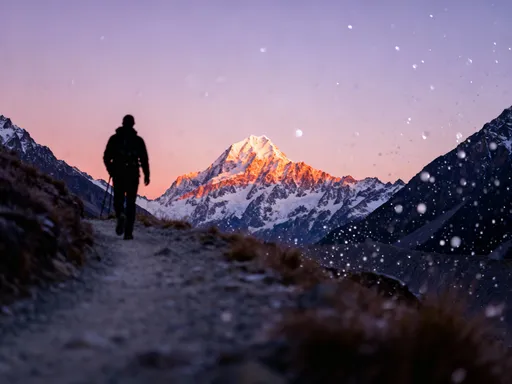
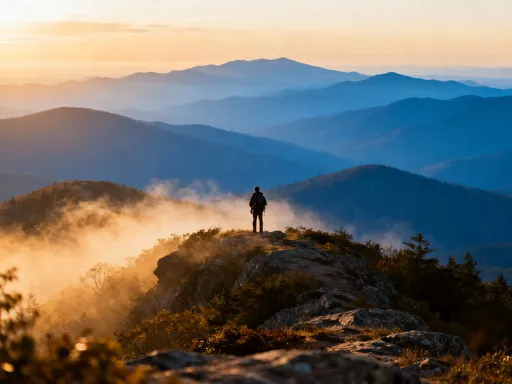
There’s a particular kind of stillness that descends on the alpine world before sunrise—a silence so complete it feels like the mountain itself is holding its breath. This is the perfect time to set out on a lesser-known trail, when the air is crisp, the shadows long, and the crowds still hours away. One of the most rewarding experiences in Mount Cook is beginning a hike in the dark, headlamp cutting a narrow beam through the pre-dawn chill, only to emerge above the tree line as the first light touches the snow.
The Sealy Tarns side trail, branching off the popular Mueller Glacier route, offers one such opportunity. While most visitors arrive mid-morning, those who start early are rewarded with solitude and an ever-changing landscape. As the sun crests the eastern ridge, the snowfields ignite in alpenglow—soft pinks and golds spilling across the ice like liquid fire. The air, thin and cold, carries the faint scent of alpine herbs and damp rock. Every footstep echoes slightly, breaking the silence in a way that feels almost reverent.
These early hikes do more than offer better photos—they deepen the connection between traveler and terrain. Without the distraction of other people, the senses sharpen. You notice the way the wind shifts with elevation, how bird calls grow fainter the higher you climb, and how the mountain’s shape seems to change with the light. This kind of immersion is rare in more crowded destinations, but it’s still possible here, simply by adjusting your schedule. Timing, in this landscape, is everything. A two-hour difference can mean the difference between solitude and a packed trail, between a private moment with nature and a shared snapshot.
For those with moderate fitness and proper gear, the early ascent to Mueller Hut is another transformative option. Though the hut itself is a destination, the path leading to it—especially the ladder sections near the end—becomes a meditative journey when traveled in stillness. The sense of accomplishment upon reaching the top, greeted by a 360-degree view of snow-capped peaks and glacial valleys, is unmatched. And when the first rays of sun warm your face, you’ll understand why some hikers return again and again, just for this moment.
Hidden Vantage Points Only Locals Know
Beyond the well-marked trails and postcard viewpoints, Mount Cook hides quiet spots known mostly to rangers, guides, and long-time visitors. These places aren’t secret because they’re forbidden, but because they require a bit more effort—or a bit more knowledge—to find. One such location is a narrow ridge that branches off the Hooker Valley Track just before the final swing bridge. While most tourists stop at the official viewpoint overlooking Hooker Lake, a short detour up a faint footpath reveals a higher vantage point with an uninterrupted panorama of Aoraki reflected in the glacial waters below.
Another hidden gem is a small, unnamed alpine lake tucked into a fold of the Sefton Range. It’s not marked on standard maps, but can be reached via a carefully navigated offshoot of the Copland Track. On still mornings, the lake becomes a mirror, perfectly doubling the image of the surrounding peaks. The silence here is profound—no voices, no camera shutters, just the occasional call of a kea or the distant rumble of ice calving from a glacier. These moments of stillness are what many travelers unknowingly seek, and what makes such places so precious.
Locals often learn about these spots through years of experience, conversations with DOC staff, or guided walks led by Māori cultural educators. While it’s important not to disclose exact locations publicly—both to protect the environment and preserve the experience—visitors can increase their chances of discovery by engaging respectfully with the community. Rangers at the visitor center are often willing to share subtle hints about lesser-known paths, provided the intent is conservation-minded. They may suggest alternative routes during high-traffic days or recommend quieter times to visit popular trails.
The key to finding these hidden viewpoints lies in patience and mindfulness. It’s not about rushing to the next destination, but about observing the landscape with intention. Sometimes, the best views come not from climbing higher, but from pausing, turning around, and noticing what’s just off the beaten path. And when you do find one of these quiet spots, the reward is more than visual—it’s emotional. You feel, however briefly, like you’ve been let in on a quiet truth about the mountain: that its beauty isn’t just in its height, but in its stillness.
Stargazing in a Gold-Rated Dark Sky Reserve
As the sun sets behind the Southern Alps, a different kind of magic begins to unfold. Mount Cook is part of the Aoraki Mackenzie International Dark Sky Reserve, one of only a few in the world to receive the highest “Gold” rating for night sky quality. This means minimal light pollution, exceptionally clear air, and some of the most breathtaking stargazing opportunities on the planet. On a cloudless night, the Milky Way arcs across the sky like a river of light, so bright it casts faint shadows on the ground.
Lying on a frost-covered hillside near Lake Tekapo or just outside the Mount Cook Village, you can watch satellites glide silently between constellations, trace the path of the Southern Cross, and even spot the faint glow of the Magellanic Clouds—two dwarf galaxies visible only from the Southern Hemisphere. The darkness here is not empty; it’s alive with movement and depth. Meteor showers, such as the annual Geminids, are especially vivid, with streaks of light flashing across the sky every few minutes.
The science behind this clarity is straightforward but remarkable. The region’s dry alpine air, high elevation, and distance from major urban centers create near-perfect conditions for astronomy. The lack of artificial light is enforced through strict lighting regulations in nearby towns—streetlights are shielded and use warm, low-intensity bulbs to minimize skyglow. Even the Mount John Observatory, a working research facility, operates under strict protocols to preserve the darkness.
For visitors, the best stargazing happens between March and September, when nights are longest and skies are clearest. Guided tours are available, led by astronomers who explain the southern constellations and share stories from both scientific and Māori traditions. But even without a guide, simply stepping outside after dark offers a humbling experience. In a world where most of us live under light-polluted skies, seeing the stars in their full glory is a rare gift—one that reminds us of our small place in a vast universe. And with Aoraki standing like a silent guardian in the background, the moment feels almost sacred.
Offbeat Activities Beyond the Main Trails
While hiking and sightseeing are the main draws, Mount Cook offers quieter, more reflective ways to engage with the landscape. One such activity is alpine birdwatching, which allows visitors to connect with the park’s unique wildlife. The kea, a mischievous green parrot native to the Southern Alps, is often seen near trailheads or alpine meadows, curious about backpacks and car windows. Less conspicuous but equally fascinating is the rock wren, one of the world’s rarest alpine birds, flitting between boulders in search of insects.
Photography at dawn offers another way to slow down and truly see the mountain. With the light shifting minute by minute, each frame captures a different mood—mist rising from the valleys, frost glittering on tussock grass, or the first rays touching the summit. Unlike midday, when contrast is harsh, morning light is soft and forgiving, ideal for both amateur and experienced photographers. Many visitors find that focusing on small details—a single flower, a pattern in the ice, a shadow on a rock—brings a deeper appreciation for the landscape.
For those who enjoy creative expression, sketching or journaling in a quiet meadow can be a meditative practice. Sitting still for an hour, observing the way clouds move across the peak or how light reflects off a glacial stream, fosters a sense of presence that’s hard to find elsewhere. Some guided walks even incorporate these elements, blending education with mindfulness. Small-group tours led by naturalists or Māori cultural guides often include stops to discuss the geological history of the region or share traditional stories about Aoraki’s significance.
Another offbeat option is glacier viewing from quieter angles. While helicopter tours are popular, they’re not the only way to see the ice up close. Renting binoculars or a small telescope allows for detailed observation of glacier movement from safe distances. Some visitors spend hours watching for subtle shifts—cracks forming, ice blocks tumbling—learning to read the language of the mountain. These quieter activities don’t require special skills, just curiosity and a willingness to look closely.
Smart Planning for a Seamless Experience
To fully enjoy Mount Cook’s hidden adventures, a little preparation goes a long way. Accommodation in Mount Cook Village is limited, and rooms—especially those with mountain views—book up months in advance during peak seasons. Staying in nearby towns like Twizel or Lake Tekapo can provide more options, and many lodges offer shuttle services to the park. These shuttles not only reduce parking congestion but also allow visitors to relax and take in the scenery without the stress of driving narrow alpine roads.
Weather in the Southern Alps is famously unpredictable. A sunny morning can turn into a blizzard by afternoon, even in summer. Checking the forecast with the Department of Conservation before setting out is essential. Rangers update trail conditions daily, and their advice can help avoid dangerous situations. Packing layers is non-negotiable—a waterproof jacket, thermal base layer, fleece, hat, and gloves should all be in your pack, regardless of the predicted temperature.
Footwear matters, too. While the Hooker Valley Track is well-maintained and suitable for most walkers, side trails like the Sealy Tarns or Mueller Hut route require sturdy hiking boots with good ankle support. Trekking poles can help on steep or slippery sections. And because mobile signal is spotty in the park, downloading offline maps or carrying a physical trail guide is a wise precaution.
Flexibility is just as important as preparation. Some of the best experiences happen when plans change. A canceled hike due to weather might lead to an unexpected visit to the Sir Edmund Hillary Alpine Centre, where interactive exhibits tell the story of Aoraki and its explorers. A delayed shuttle could mean time to chat with a ranger or share stories with fellow travelers. By staying open to these moments, visitors often find that the journey becomes as meaningful as the destination.
Leaving No Trace, Taking Only Memories
With great beauty comes great responsibility. The hidden corners of Mount Cook remain pristine not by chance, but because visitors choose to protect them. The Leave No Trace principles are more than guidelines—they’re a promise to future generations. This means packing out all trash, including food scraps and tissues, which can take years to decompose in alpine environments. It means staying on marked trails to prevent soil erosion and avoid disturbing fragile vegetation like cushion plants that take decades to grow.
Drones, while tempting for capturing aerial views, are prohibited in national parks without a permit. Their noise disrupts wildlife and other visitors seeking peace. Similarly, feeding animals—even out of curiosity—can harm their health and alter natural behaviors. The kea, though playful, is a protected species, and human interaction can lead to dependency or dangerous habits.
Respect also extends to cultural values. Aoraki holds deep significance for Ngāi Tahu, the local Māori iwi (tribe). It is considered a sacred ancestor, and certain areas may have spiritual importance. While visitors are welcome to explore, doing so with humility and awareness honors this relationship. Learning a few Māori words, such as “kia ora” (hello) or “whenua” (land), can be a small but meaningful gesture of respect.
Ultimately, preserving these hidden experiences depends on collective care. Every decision—to stay on the path, to carry out waste, to speak softly in quiet places—adds up. And when we protect these spaces, we ensure that others, too, can feel the awe of standing alone beneath a mountain, or the wonder of seeing the Milky Way stretch from peak to horizon.
Final Thoughts: The Soul of True Exploration
Mount Cook’s hidden adventures are not about escaping people alone—they’re about finding connection. Connection to nature, to culture, and to oneself. In a world that often feels rushed and crowded, this alpine sanctuary offers a rare chance to slow down, to listen, and to witness beauty in its most unfiltered form. The early morning hike, the secret viewpoint, the star-filled sky—these are not just experiences, but invitations to be present.
True exploration isn’t measured by how many places you see, but by how deeply you see them. It’s in the quiet moments—the hush before sunrise, the reflection in a still lake, the shared smile with a fellow traveler—that we find meaning. And in protecting these moments, we do more than preserve a landscape; we preserve a way of traveling that values reverence over rush, depth over distance.
So if you’re planning a journey to Mount Cook, go beyond the postcards. Seek the quiet trails, the unseen angles, the moments that can’t be rushed. Let the mountain teach you patience, presence, and respect. Because in the end, the greatest souvenir isn’t a photo or a souvenir—it’s the memory of standing in silence, under a sky full of stars, feeling small in the best possible way.